English

0 item(s)
View cart
You have no items in your shopping cart.

A satellite phone earns its place in a hiking pack when a bad situation cannot wait for a trailhead, a passing hiker, or a thin bar of cell service. The best satellite phone for hiking is not necessarily the smallest or least expensive model. It is the one that can connect on your route, fits the way you travel, and is ready to use before you need help.
For most backcountry hikers in the United States, that usually points to an Iridium phone. Iridium's satellite network provides truly global coverage, including polar regions, which matters when a trip moves beyond familiar trails or into remote mountain country. But voice calling is only one part of the decision. Your expected use, group size, route, weather exposure, battery strategy, and emergency plan all affect what belongs in your pack.
A hiking satellite phone has a tougher job than a device carried in a vehicle or stored at a base camp. It needs to remain protected from rain, dust, and hard knocks, while staying accessible enough to make a call quickly. It also needs a clear view of the sky. Deep canyons, dense timber, steep valley walls, and a tent can interfere with satellite visibility, regardless of the phone you choose.
Start with coverage, not hardware. A phone can be well built and still be the wrong choice if its network does not reliably serve your destination. Hikers heading into Alaska, the western mountain states, remote Canada, or international terrain generally benefit from Iridium's broad footprint. Inmarsat may be a practical option for many routes at lower latitudes, but it does not cover the polar regions and requires a southern-facing view in much of North America. Globalstar can work well in supported coverage areas, but hikers should confirm current service availability for every part of the route instead of assuming continental coverage is enough.
Next, decide whether you truly need live voice communication. If you need to speak with family, coordinate an evacuation, relay changing medical details, or manage a field team, a satellite phone is the right class of equipment. If your primary need is two-way text messaging, location sharing, weather access, and SOS, a satellite messenger may be lighter, simpler, and less costly to operate. Neither choice is automatically better. The right choice follows the communication requirement.
For hikers who need the widest possible coverage and a serious emergency-ready feature set, the Iridium Extreme is a leading choice. It combines global Iridium voice service with built-in GPS and an integrated SOS button. That makes it well suited to expedition hikers, guides, hunters, and remote professionals who need both a phone call and a direct emergency escalation option.
The trade-off is price and size. It is a purpose-built field device, not a slim consumer phone, and its airtime should be selected carefully before departure. For many users, those compromises are worth it. When a trip involves remote terrain, uncertain itineraries, or travel outside the United States, a dedicated SOS button and global network can provide meaningful confidence.
The Iridium 9555 is a dependable choice for hikers whose priority is voice calling on the Iridium network. It is compact for a satellite phone, proven in field use, and generally a more economical entry point than GPS- and SOS-equipped premium models.
Its limitation is equally clear: it is a phone first. It does not replace a GPS messenger or personal locator beacon for users who want dedicated tracking, simple check-ins, or integrated emergency workflows. A hiker carrying the 9555 should have a separate navigation and emergency plan, along with the discipline to keep the phone charged, dry, and readily available.
The Inmarsat IsatPhone 2 can be a sensible option for hikers who will stay within Inmarsat coverage and want long standby capability with straightforward satellite calling. It is a practical device for trips in the lower 48, many international destinations, and established remote work locations where the network has been confirmed in advance.
It is less appropriate for far-north travel and routes where terrain makes a consistent view toward the southern sky difficult. Inmarsat satellites are geostationary, so the phone must point toward a fixed part of the sky. On an open desert trail, that may be easy. In a narrow canyon or on a north-facing mountain slope, it can be a real operational consideration.
The Globalstar GSP-1700 is worth considering for hikers who remain in areas with verified Globalstar service and want a familiar, voice-focused satellite phone experience. It can be a cost-conscious choice for regular trips in supported regions, particularly when an Iridium-level global footprint is not necessary.
Coverage verification is essential. Do not choose this phone for a long route that crosses marginal areas simply because the map shows general availability near your destination. Check the actual trail corridor, anticipated camps, and any side routes where an emergency could occur.
A phone gives you a live conversation. That matters when the person receiving the call needs to ask questions, provide instructions, or coordinate a response based on changing conditions. A broken ankle, rapidly worsening weather, a missing group member, or a medical concern can be easier to manage when you can speak directly with a dispatcher, outfitter, family contact, or emergency responder.
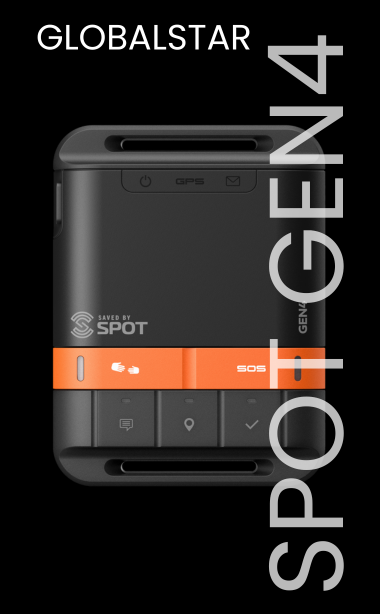
A messenger is usually the more efficient tool for routine hiking communication. It is lighter, lets contacts follow your location, and supports check-ins without the time and cost of voice calls. Many experienced hikers carry a messenger for everyday tracking and a satellite phone when their route, responsibility level, or group needs justify voice capability.
A personal locator beacon is another important option. It offers a dedicated distress signal without a subscription, but it does not provide two-way messaging or voice communication. For a solo hiker who wants a last-resort rescue device, that simplicity can be an advantage. For a guide or remote worker who must report conditions and coordinate logistics, it may not be enough.
The device is only half the deployment. A satellite phone needs an active SIM and an airtime plan that matches your trip length and expected use. A low-use prepaid option can work for an occasional backcountry trip, while frequent hikers, guides, and field teams may be better served by a recurring plan with predictable monthly access.
Do not treat included minutes as a reason to make unnecessary calls. Satellite voice minutes are valuable, and connections can take longer than a cellular call. Before the trip, give your designated contacts a clear protocol: when you will call, what number they should recognize, what information to have ready, and when they should initiate an escalation if you miss a scheduled check-in.
For a one-time expedition, a rental can be the practical route. It avoids purchasing a device that may spend most of the year in storage, while still giving you the correct equipment for a demanding trip. Ownership makes more sense for frequent hikers, professional guides, remote property owners, and teams that need recurring readiness.
A satellite phone should be tested outside before the trip, not activated for the first time after an injury or navigation error. Make a short call with a clear view of the sky, save key contacts in international dialing format, and confirm that every member of the party knows how to unlock and use the device.
Before departure, complete these five checks:
Keep the phone on your body or near the top of your pack when conditions are uncertain. A phone buried under layers of gear is not much help during a sudden fall, river crossing, or unplanned stop. In cold weather, protect the battery from prolonged exposure and avoid leaving the unit outside overnight.
A satellite phone does not eliminate risk, and it does not guarantee an instant connection in every canyon, forest, or storm. It gives you another line of communication when cellular infrastructure is absent. That line works best when it is backed by route planning, navigation, first-aid capability, a realistic turnaround plan, and contacts who know when to act.
If you are weighing networks, airtime, rentals, or a phone-and-messenger combination, Outfitter Satellite can help match the equipment to the terrain and communication requirement. The best time to make that decision is while the map is still on the table and the trailhead is days away.