English

0 item(s)
View cart
You have no items in your shopping cart.

Most emergency plans sound good until something you depend on stops working. Your phone has no signal, the power is out, home internet is down... suddenly, the question isn't whether you've packed enough flashlights. it's: how do we communicate now?
September is National Preparedness Month, making it a useful time to look beyond the obvious emergency supplies and test the systems you would actually depend on during a hurricane, wildfire, severe storm, flood, prolonged power outage or evacuation.
Ready.gov encourages households to understand the risks they face, make a family emergency plan, maintain emergency supplies and think about how they will communicate during a disaster.
For anyone building or updating a preparedness plan this September, here are some of the communication questions worth asking.
Start with the most basic test.
Imagine your cell phone suddenly shows No Service.
Could you still call someone?
Cellular networks are incredibly useful, but they remain dependent on terrestrial infrastructure. Major storms, power disruption, physical damage or unusually heavy demand can affect the service available in an area.
That is one reason satellite phones are commonly included in more comprehensive emergency communication plans.
A satellite phone communicates directly through a satellite network instead of depending on a nearby cellular tower. For households, ranches, rural properties, businesses, emergency teams and people living in areas vulnerable to severe weather, that provides another independent way to communicate.
Outfitter Satellite carries a full range of satellite phones for customers who need voice communication beyond conventional cellular coverage.
If your main priority is simply being able to make and receive voice calls, the Iridium 9555 is worth considering.
The handset operates using the Iridium satellite network and provides satellite voice and SMS communication in a portable format.
For many preparedness plans, that simplicity is actually an advantage.
You don't necessarily need broadband internet or dozens of apps during an emergency. Sometimes you just need to speak to a relative, colleague, property manager or emergency contact.
For a more rugged option, the Iridium Extreme combines satellite voice communication with GPS-related functionality and a dedicated SOS feature.
It is built for harsher operating environments and is particularly well suited to people who want their emergency phone to double as equipment for remote travel, field work, hunting, marine use or other off-grid activities.
An emergency doesn't always require a phone conversation.
If members of your household evacuate in separate vehicles, someone is checking property after a storm, or a family member becomes stranded somewhere without reliable cellular service, knowing their location can be just as important.
This is where a satellite communicator can be extremely useful.
The Garmin inReach Messenger is a compact satellite communicator designed around two-way text messaging, location sharing and interactive SOS communication over the Iridium network.
It can send and receive messages beyond cellular coverage, share GPS location information and trigger an SOS that connects with Garmin's emergency response service. Outfitter currently lists battery life of up to 28 days in 10-minute tracking mode under suitable conditions, and the device can also provide limited safety charging to a depleted phone.
That makes it particularly interesting for preparedness because it can sit between two extremes:
You aren't carrying a full satellite phone, but you still aren't relying entirely on your cell network.
It can work well in a go-bag, vehicle emergency kit, remote property kit or as part of equipment you already use for hiking, hunting, overlanding and camping.
It's worth thinking about this distinction before buying emergency equipment.
Not everybody needs two-way satellite conversations.
Sometimes your communication plan is simply:
Let everyone know I'm OK.
Send my position.
Request assistance if things become serious.
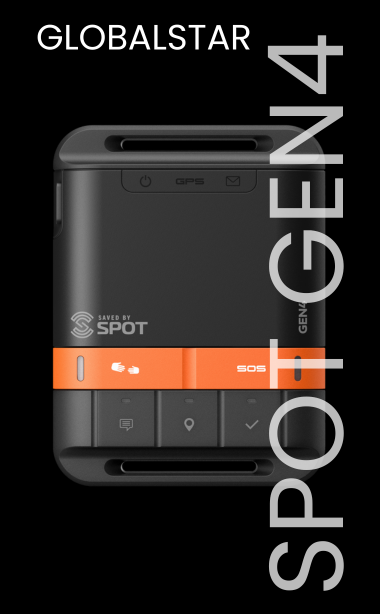
A device such as the SPOT Gen4 is designed around that kind of simple satellite communication.
The SPOT Gen4 can transmit GPS coordinates, send predefined check-in or custom messages and issue an SOS using the Globalstar satellite network.
That makes it a useful option for people who want something relatively straightforward rather than a more complex communications device.
For example, your household could agree beforehand that a check-in message means:
“I'm safe and continuing to our meeting point.”
Another message could mean:
“Plans have changed. Check my current location.”
The important part isn't merely owning the tracker.
It's deciding beforehand what your messages mean and who should receive them.
Individual devices solve individual communication problems. But some situations call for a shared connection. Maybe several people are sheltering at the same property. Maybe you're managing a remote work crew. Maybe you're operating from a temporary emergency base. Or perhaps your normal internet connection is unavailable and you still need access to email, messaging or online information.
Outfitter offers Iridium satellite Wi-Fi hotspot rentals built around devices such as the Iridium GO! and GO! exec.
These allow compatible phones and other devices to access satellite-powered communications, with the GO! exec providing more capable data connectivity than the original GO!.
For temporary emergency planning, renting can also make more sense than purchasing equipment that may only be required during a particular period.
Satellite communication doesn't stop at phones and messengers. For situations where you need more conventional internet connectivity (email, online information, messaging platforms or connectivity for multiple users) portable satellite internet can provide another option.
Outfitter currently offers Starlink Mini rentals for short-term satellite internet requirements.
The Starlink Mini combines the antenna and Wi-Fi hardware into a compact portable system and is designed to provide broadband-style connectivity in locations where fixed and cellular internet aren't available.
There is an important difference, though: a satellite communicator and satellite internet terminal solve different problems. A small inReach device is designed to provide lightweight messaging, tracking and SOS capability.
Starlink is designed to provide internet connectivity. For a comprehensive preparedness plan, those technologies can complement each other rather than necessarily replacing one another.
Emergency communications only work while your equipment has power. Ready.gov recommends maintaining alternative charging options for phones during power outages.
Apply the same thinking to your satellite equipment. Keep the correct charging cables with the device. Maintain charged power banks. Know whether the equipment can be charged from your vehicle. Replace aging batteries. Keep spare batteries where appropriate. If you use rechargeable equipment, add a recurring reminder to charge it.
And don't assume that a device sitting unused in an emergency kit will still have a full battery six months later.
This one is easy to forget. A satellite phone or communicator may require active airtime or a service subscription before certain communication features can be used. Don't discover that during the emergency.
If a satellite device forms part of your preparedness plan:
Check whether its service is active.
Understand your airtime or subscription.
Make sure important contacts have the satellite number if applicable.
Confirm your SOS and emergency contact configuration.
Keep activation information somewhere accessible.
Review the setup periodically.
Outfitter provides satellite airtime and SIM services alongside its hardware, so it is worth treating device + power + active service as one complete system rather than three separate jobs.
Owning satellite equipment and knowing how to operate it are two very different things.
Make a test satellite call.
Send a message from your communicator.
Try sharing your location.
Check that the intended recipient actually receives the message.
Find out how long satellite acquisition normally takes.
Practice outside where the device has a clear view of the sky.
Satellite equipment can be extremely useful outside cellular coverage, but buildings, heavy tree cover, terrain and other obstructions can interfere with satellite visibility. Outfitter's own rental guidance recommends getting away from buildings and trees and obtaining a good satellite signal before attempting calls.
The middle of a real emergency is a terrible time to read the quick-start guide for the first time.
National Preparedness Month is the ideal excuse to gather your household and run through five questions:
If we had to evacuate tonight, where would we go?
If cell service disappeared, how would we communicate?
If we became separated, how would we share our locations?
How would we keep our communication equipment charged?
Does everyone who may need the equipment know how to use it?
If you can't confidently answer one of those questions, you've just identified something useful to work on.
Preparedness doesn't have to mean buying more equipment.
Sometimes the biggest improvement is simply making a clearer plan.
For equipment that forms part of a permanent household, vehicle, business or remote property emergency kit, buying usually provides the obvious advantage: the equipment is there when the unexpected happens.
But there are times when renting makes a lot of sense. Perhaps a major storm is approaching and you want another communications option temporarily. Maybe you're travelling into a hurricane-prone region. Perhaps your business needs additional equipment during seasonal storm response.
Or you simply want to use a satellite communicator before deciding whether to purchase one.
Outfitter's satellite equipment rental service currently includes Iridium satellite phones, Garmin inReach Mini 2 units, satellite hotspots and Starlink equipment.
You can also explore dedicated Iridium satellite phone rentals if voice communication is your priority or Garmin inReach Mini 2 rentals if messaging, tracking and SOS functionality are a better fit.
For predictable risks such as hurricane season, don't leave rental arrangements until the last possible moment. Receiving the equipment early gives you an opportunity to understand the controls, charge everything and perform a test before conditions deteriorate.
Most of the time, your smartphone will do everything you need. That's exactly why losing access to it can cause such a problem. A resilient emergency plan doesn't assume one network, one power source or one device will always be available. It creates alternatives.
This National Preparedness Month, take a few minutes to review how you would stay in contact if cellular service, power or conventional internet suddenly disappeared.
And make sure that when normal communication stops, your ability to ask for help doesn't stop with it.
For more general disaster planning advice, read Outfitter Satellite's Natural Disaster Preparedness Guide.
For organizations responsible for employees, field crews or larger-scale continuity planning, you can also explore Outfitter's Emergency Communications solutions for satellite voice, messaging, tracking and team visibility.
Outfitter Satellite has supplied satellite communication equipment to customers operating well beyond conventional coverage for decades.
Whether you're building a family emergency kit, preparing a remote property, planning ahead for hurricane season or improving business continuity, the right solution depends on one thing:
What communication capability do you need when everything else stops working?
Explore satellite phones, satellite communicators, GPS trackers, hotspots and rentals from Outfitter Satellite, or speak with our team for help choosing the right setup for your emergency communication plan.