English

0 item(s)
View cart
You have no items in your shopping cart.

A dead zone is manageable until the weather shifts, a crew member is injured, the engine will not restart, or a float plan needs to change. A satellite communicator for boating gives you a communications path when cellular coverage falls away - but only when the device, network, power setup, and service plan match the way you operate.
For a kayak angler a few miles offshore, a compact two-way messenger may be the right safety layer. For a cruising sailboat crossing open water, that same device may be valuable for backup messaging but insufficient as the primary means of communication. The right decision starts with the route, the vessel, and the consequences of being unable to reach help.
A satellite communicator sends and receives messages through a satellite network rather than a local cell tower. Depending on the device, it can support two-way text messages, GPS location sharing, weather updates, tracking intervals, and an SOS function monitored by a professional emergency response coordination center.
That capability solves a specific problem: maintaining contact beyond dependable cellular range. It does not replace every piece of marine safety equipment. A communicator is not a substitute for a properly registered EPIRB or PLB where one is appropriate, a VHF radio for local marine traffic and Coast Guard communications, required navigation equipment, or sound judgment about weather and fuel range.
Think of it as a practical layer in a communications plan. It can keep family, a shore contact, or an operations manager informed of your position. It can also provide a way to request assistance when VHF range and cell service are no longer dependable.
The most useful device is not necessarily the one with the longest feature list. It is the one your crew can operate quickly, keep charged, and use on the waters you actually travel.
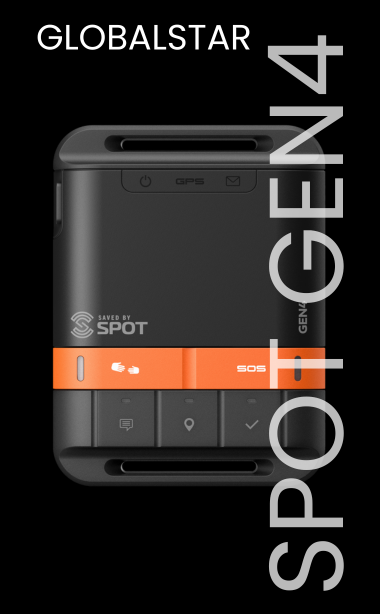
Small boats and paddled craft often have limited space, limited onboard power, and a higher chance of separation from the vessel or electronics. A compact, waterproof two-way satellite messenger with an SOS button and location sharing can be a strong fit. Look for a device that can be secured to a PFD or kept in a dry, accessible pocket.
For this use, preset check-in messages matter. A simple "back at the ramp" or "running late but safe" message prevents unnecessary concern without requiring a long text exchange. Tracking can also give a shore contact useful context if you are overdue.
A longer passage calls for more than an emergency button. You may need regular weather information, two-way text communication with people ashore, reliable position reporting, and a backup option if onboard systems fail. A handheld satellite phone or a fixed marine satellite solution may belong alongside a two-way communicator, not in place of it.
Pay close attention to network coverage. Some satellite services are designed for global coverage, while others have regional limitations or rely on a view of the sky that may be more challenging in certain waters. Coverage claims should be compared with your planned route, including coastal passages, high latitudes, and ocean crossings.
Charter operators, research vessels, workboats, and offshore teams often need more than a single emergency contact. Scheduled tracking, assigned check-in procedures, location history, and clear escalation rules create operational visibility. The device should be part of a written communications plan: who monitors messages, who receives alerts, what information is sent, and when a missed check-in becomes an incident.
For teams, the economics matter as well. A low-cost device can become the wrong choice if it does not support the tracking frequency, message volume, or account management your operation requires. A service plan should be selected around expected use, not just the lowest monthly price.
Satellite communications require a usable path between the device and the satellite. On a boat, that means antenna placement and sky view matter. A handheld communicator generally works best when held or mounted where it has a broad view of open sky. It may struggle inside a cabin, beneath a hardtop, next to large metal structures, or under a dense canopy of rigging and equipment.
Before relying on a new device, test it from the vessel. Send messages from the helm, cockpit, cabin entrance, and any location where you expect to use it. Learn how long a message typically takes under normal conditions. If your communicator pairs with a phone, test the app workflow too. A phone with a dead battery, a forgotten password, or an app that has not been updated can turn a capable satellite device into a frustrating one.
A fixed external antenna, docking station, or purpose-built marine installation may improve reliability for vessels that need consistent voice or data capability. That added capability comes with installation, power, and service-cost considerations. It is often justified for offshore and professional use, while a handheld unit remains more practical for occasional boaters.
An SOS button is designed for grave or life-threatening emergencies. When activated, the device sends your location and opens a two-way emergency conversation when the network and device support it. That conversation can help responders understand whether you need medical support, evacuation, towing assistance, or another response.
The button alone is not the plan. Keep the communicator accessible, not buried in a ditch bag below deck. Make sure every regular crew member knows where it is, how to activate SOS, and how to cancel an accidental activation. Keep your emergency contacts current in the account portal, and tell those contacts what a check-in message from you looks like.
Also understand the distinction between emergency rescue coordination and routine marine assistance. A satellite SOS service can initiate help during a true emergency, but it is not a replacement for towing coverage, vessel insurance, or a local marine assistance provider. Mechanical trouble without immediate danger may call for a different response than a medical emergency or a vessel taking on water.
Marine electronics face a combination of salt spray, vibration, heat, and wet hands. Check the device's water-resistance rating, but do not treat that rating as a reason to leave it exposed unnecessarily. Use a marine-grade mounting option, protective case, or dry bag appropriate to the device and operating conditions.
Battery planning is equally practical. Know the expected battery life at your selected tracking interval, and remember that frequent tracking, cold temperatures, message exchanges, and phone pairing can reduce it. Carry a charged power bank, a 12-volt charging option, or both. On longer trips, build charging into the daily routine rather than waiting for a low-battery warning.
For small craft, personal carry is often best. If the boat capsizes or you become separated from it, a communicator mounted permanently at the console may not be reachable. For a larger vessel, a fixed location near the helm can make sense, provided a portable backup remains available in an abandon-ship bag when the voyage demands it.
Satellite airtime plans vary by network and device. Some include a set number of messages, while others charge by use or add costs for premium weather, frequent tracking, and higher-volume data services. Review activation fees, suspension options, overage rates, and annual commitments before you leave the dock.
A seasonal boater may prefer a flexible plan or a rental for a one-time offshore trip. A delivery captain or workboat crew may need ongoing service with predictable tracking and message allowances. Renting can be a sensible way to validate coverage, device handling, and onboard mounting before committing to a purchase.
Do not wait until departure morning to activate service. Confirm the plan is active, register emergency contacts, update firmware, charge the device, and conduct a real message test. This is also the right time to create a short message protocol with your shore contact: departure, arrival, delay, route change, and emergency.
Before each trip beyond dependable cell coverage, verify that the communicator is charged, active, and assigned to the correct account. Confirm that your contacts and float plan are current. Test your understanding of the SOS process without triggering it, and pack the device where it remains accessible if conditions deteriorate.
Outfitter Satellite can help boaters compare networks, devices, airtime options, rentals, and marine installation considerations based on the waters they run and the communications they need.
The best time to learn a satellite communicator is while the boat is secure, the weather is calm, and you do not need it. Make it part of your departure routine, and it will be ready to support a clear decision when the horizon is farther away than the nearest cell tower.