English

0 item(s)
View cart
You have no items in your shopping cart.

A dead zone is not always an inconvenience. For a field technician working alone, a vessel beyond coastal coverage, or a family driving remote roads, it can become a safety and accountability problem quickly. A satellite phone rental provides a practical way to carry dependable voice communications for a specific trip, assignment, outage response, or seasonal operation without committing to equipment ownership.
Renting is not automatically the lowest-cost answer. It is the right answer when the deployment is temporary, timing is tight, or the communication requirement may change from one mission to the next. The value comes from placing the appropriate network, device, airtime plan, and accessories in the field before cellular service disappears.
A satellite phone is built for voice communication outside conventional cellular infrastructure. It connects to a satellite network rather than a nearby cell tower, making it useful on remote job sites, backcountry routes, offshore passages, disaster areas, and rural travel corridors. Rental gives users access to that capability for short-term needs while avoiding the purchase price, long-term service commitment, storage, and maintenance of a device that may sit unused for much of the year.
For an individual, renting often makes sense for a one-time hunting trip, an overland expedition, an international journey, or a remote boating itinerary. For an organization, it can be a strong fit for storm response, temporary field crews, environmental surveys, media production, construction mobilizations, or a project with a defined end date.
The decision becomes less straightforward when deployments repeat. A team that spends several months each year outside cellular coverage may be better served by owning its equipment and maintaining active service. Ownership can also simplify readiness for organizations that must deploy with little notice. The practical question is not simply, “How much does a phone cost?” It is, “How often will we need it, where will it operate, and what happens if communications fail?”
The most common rental mistake is choosing a phone before defining the operating conditions. Satellite devices are not interchangeable, and no network performs exactly the same way in every region or environment.
First, identify where the device will be used. Coverage maps matter, particularly for international, maritime, and high-latitude travel. Iridium-based phones are often selected for broad global coverage, including polar regions. Other satellite networks may be appropriate in their supported service areas and can offer different device or airtime options. A knowledgeable provider can match the planned route and operating region to the available network rather than relying on assumptions.
Next, consider the work environment. A phone carried by a backpacker has different needs than one used from a vehicle, a bridge, a remote command post, or an industrial site. A hand-held unit is portable and direct, but vehicle, marine, and in-building applications may require an external antenna, docking station, or fixed installation to maintain a clearer view of the sky.
Finally, define the communication purpose. If the requirement is occasional check-in calls and emergency escalation, a basic voice rental may be sufficient. If a supervisor needs to coordinate several workers, transfer operational details, or maintain scheduled contact with a traveling asset, the plan structure, call volume, accessories, and backup procedures deserve more attention.
Satellite phones work best with a clear view of the sky. Dense tree cover, steep canyon walls, building interiors, metal roofs, and the cabin of a vehicle can block or weaken the connection. This is not a defect in the equipment. It is a deployment condition that users need to plan around.
Before leaving coverage, power on the phone outdoors, allow it to register on the network, and make a test call. Learn how the device displays signal strength, how to dial the required country code, and where the antenna should point. If the phone will be used from a truck, boat, or building, confirm whether an external antenna is needed before the rental period begins.
A rental quote can include more than the handset. The device, battery, charger, protective case, and rental duration are common components, but details vary. Airtime is often separate from the physical equipment rental, and that distinction matters. Voice minutes, incoming calls, voicemail, text capability, data use, and international dialing can each affect the total cost.
Ask for clarity on four practical points before equipment ships:
Also confirm who will receive and use the phone. Satellite calls may require a country code even when calling a US number, and users should know the assigned satellite number before departure. Give that number to the people who may need to reach the field team. If the deployment involves international operations, verify the destination country’s rules for carrying and using satellite communications equipment. Some countries restrict satellite devices or require advance authorization.
Many users overestimate the amount of voice time needed, then underestimate how expensive an unplanned, lengthy call can be. Satellite voice is best treated as mission communication, not a replacement for unlimited cell service.
Build an expected call pattern. A solo traveler may need a short arrival call, periodic check-ins, and an emergency option. A utility crew may need a morning status call, a location update, a safety check, and a method to report a change in conditions. Those are very different airtime profiles.
Keep calls brief and organized. Before dialing, know what information must be exchanged: location, personnel status, weather conditions, next check-in time, and required action. For teams, establish a calling schedule and a missed-check-in procedure. A phone only improves safety when the people on both ends know when to use it and what to do when a planned contact does not occur.
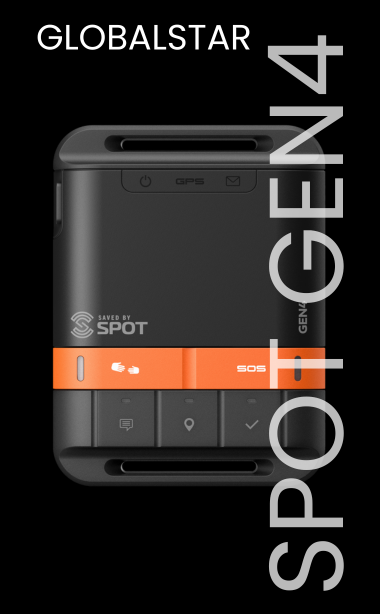
Voice may not be the only tool required. A satellite messenger, GPS tracker, personal locator beacon, or two-way radio can complement a rental phone depending on the assignment. For example, a lone worker program may use tracking for routine visibility and reserve satellite voice for escalation. A backcountry group may carry a locator beacon for emergency distress signaling while using the phone for coordination. The best setup is often layered, not dependent on one device for every task.
A rental phone should be treated like field equipment, not a piece of consumer electronics handed over at the trailhead or job-site gate. A five-minute orientation can prevent avoidable problems when conditions are poor and time matters.
Users should know how to charge the phone, extend the antenna, acquire signal, place a call, end a call, check battery level, and store the device securely. They should also understand that call setup can take longer than on a cellular phone and that moving a few yards to a more open location may improve reliability.
For professional deployments, assign responsibility for the equipment. Record the device number, user name, trip or project details, scheduled return date, and emergency contacts. If several units are being issued, label them and verify that each user completes a test call. This small amount of control helps prevent lost devices, unexpected airtime charges, and uncertainty during an incident.
Weather delays, extended routes, vessel diversions, and emergency assignments can all outlast the original rental window. Discuss extension options before the device is in a remote location. It is far easier to adjust a rental plan while the team still has reliable communications and access to support.
Power is another operational consideration. Charge fully before travel, protect batteries from extreme temperatures, and carry a compatible vehicle, solar, or spare-power solution when the trip length demands it. A phone with a depleted battery is no more useful than a phone without a signal.
Outfitter Satellite can help match short-term satellite communications to the deployment, whether the need is one phone for a remote trip or multiple units for a field operation. The right recommendation begins with the route, duration, users, and communication plan, not with a one-size-fits-all device.
A satellite phone rental is most effective when it is tested, assigned, and backed by clear check-in procedures before the team leaves cellular coverage. Put that preparation in place, and the phone becomes more than a contingency item in a case. It becomes a dependable line back to the people who need to know you are safe.