English

0 item(s)
View cart
You have no items in your shopping cart.
A crew can have full cellular signal at the trailhead, then lose every bar two miles into a canyon. A boat can leave a well-connected marina and enter an area where coastal coverage is intermittent. A utility team may work near a town but find that terrain, damaged infrastructure, or network congestion makes a phone unreliable when it matters most. That is the practical difference behind satellite versus cellular coverage: not which technology is better in every situation, but which one can support your mission where and when you need it.
For many field operations, the answer is not cellular or satellite. It is cellular first, with satellite equipment ready when the network ends, fails, or cannot be trusted as the only safety layer.
Cellular service depends on nearby ground infrastructure. Your phone connects to a tower, which connects to the carrier network through backhaul equipment, power systems, and local infrastructure. This model delivers excellent voice quality, high data speeds, and familiar device options in populated areas. It is also economical for everyday communication.
Its limitation is geographic and operational. Towers are concentrated where people live, travel, and work. Mountains, canyons, heavy forest, open water, deserts, offshore areas, and remote highways can sit outside dependable service. Even in a nominally covered area, a signal can be weakened by terrain, building materials, weather conditions, distance from the tower, or competing users.
Satellite communications use orbiting satellites rather than local towers. A compatible device transmits toward the sky and routes traffic through a satellite network. That allows service far beyond the footprint of terrestrial cellular systems, including remote land routes, offshore waters, polar-adjacent regions depending on the network, and areas affected by local infrastructure outages.
Satellite is not magic coverage in every position. The device needs a usable view of the sky. Deep canyon walls, dense tree cover, large structures, and metal vehicle roofs can block or degrade the signal. But where a clear or mostly clear sky view is available, satellite gives travelers and teams an independent path to communication that does not rely on the nearest cell tower.
A carrier map is a planning tool, not a field guarantee. It may show outdoor service under ordinary conditions, while your actual position is on the wrong side of a ridge, inside a vehicle, below the tree line, or at the edge of a tower sector. Coverage also says little about network availability during a large event.
During wildfires, hurricanes, severe storms, or major public gatherings, cellular networks can become overloaded. Towers may lose commercial power, sustain damage, or have disrupted backhaul connections. First responders may also receive network priority that affects other users. A phone that worked perfectly the previous week may be unable to place a call when evacuation, welfare checks, or coordination are underway.
This does not make cellular unsuitable. It makes it a single point of dependency when used alone outside reliable service areas. Satellite equipment provides a second communications path for situations where the consequences of losing contact are high.
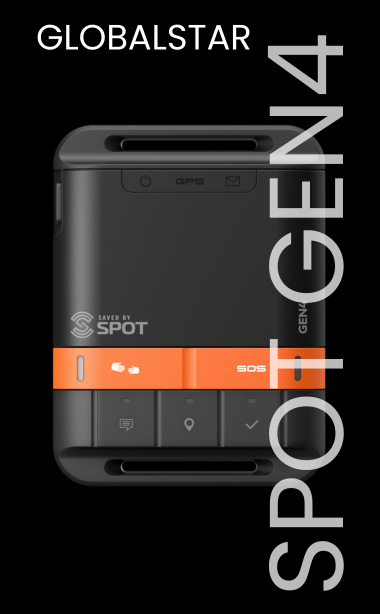
The right satellite service depends on the task. A compact messenger or personal locator beacon may be the best fit for an individual hunter, hiker, or endurance athlete who needs SOS access and location sharing without carrying a full satellite phone. A handheld satellite phone can support voice calls and text messages for remote crews, guides, vessels, and expedition travelers.
For teams needing maps, work files, video, remote monitoring, or multiple connected users, a satellite internet terminal may be more appropriate. Vehicle-mounted, marine, aviation, and fixed-site systems can also provide dependable communications for longer deployments where personnel cannot work without connectivity.
Satellite tools are particularly valuable when the operational need is clear:
When dependable service is present, cellular remains the more convenient and often more capable choice. Modern smartphones support fast data, high-quality video calls, cloud applications, navigation, and familiar messaging platforms. Cellular hardware is widely available, easy to charge, and usually less expensive to operate for frequent high-volume use.
For workers who spend most of their time in cities, established service corridors, or industrial sites with verified coverage, satellite may not need to be the primary connection. The practical approach is to identify where a loss of cellular service would create a safety, productivity, or compliance problem, then equip those gaps appropriately.
A construction manager traveling between urban sites has different requirements than a survey crew working across public land. A recreational boater who remains near shore has different requirements than a commercial vessel operating offshore. The device should follow the exposure, not the label on the job.
Satellite communications require more deliberate use than a typical cell phone. Users may need to step outdoors, extend an antenna, face the device correctly, or move to an opening with better sky visibility. Voice calls can have a slight delay, and data performance varies significantly by network, terminal type, plan, location, and network traffic.
Cost is also different. Satellite airtime plans are built around a specialized network and may include monthly access fees, prepaid units, data allowances, or service terms designed for seasonal and enterprise use. The lowest-cost device is not always the lowest-cost deployment if it cannot support the needed check-in schedule, voice use, tracking interval, or data requirement.
Training matters as much as hardware. A satellite phone stored in a vehicle is of little use if the operator does not know how to deploy the antenna, place a test call, manage battery power, or explain their location during an emergency. A tracker only improves accountability if someone is watching the portal and knows what to do when a check-in is missed.
Before a trip or deployment, test the equipment outdoors, confirm the service is active, save key contacts, and make sure every user understands the emergency procedure. That short preparation can prevent confusion when conditions are already difficult.
Start with the communication outcome, not the device. If the goal is emergency rescue capability for a solo backcountry trip, a personal locator beacon or two-way satellite messenger may be sufficient. If the goal is daily welfare checks for a dispersed field team, tracking and scheduled messaging may be the priority. If crews must speak with dispatch, suppliers, or incident command, a satellite phone or push-to-talk solution may be a better fit.
Then consider duration. For a one-week hunt, sailing trip, film shoot, or inspection project, renting equipment can provide the right capability without committing to permanent ownership. For recurring deployments, owned devices with an ongoing airtime plan may offer more control and faster readiness. Organizations with varied missions often keep a mix of personal safety devices, handheld phones, vehicle kits, and deployable internet terminals.
Network selection should also match geography. Different satellite networks have different coverage footprints, device designs, data capabilities, and visibility requirements. A solution that performs well in the continental United States may not be the right choice for an offshore route, international expedition, or far-northern assignment. This is where application-specific advice matters more than a generic specification comparison.
The strongest field communications plan usually uses layers. Cellular handles normal work where it is available. Satellite covers remote travel, dead zones, and disrupted infrastructure. GPS tracking and scheduled check-ins give managers visibility even when a live conversation is unnecessary. Maps, offline navigation, spare power, and a defined emergency protocol support the communications equipment around them.
Outfitter Satellite helps customers match those layers to the actual deployment, whether that means a rented satellite phone for a remote assignment, a tracker for a lone-worker program, or a connected terminal for an extended field base. The right setup is the one your people can operate confidently, maintain in the field, and rely on when the ordinary network is no longer part of the plan.
Before the next remote trip, route survey, offshore passage, or storm season, identify the point where cellular coverage becomes uncertain. That is the point to establish your satellite backup, test it under real conditions, and make sure everyone knows how to use it.