English

0 item(s)
View cart
You have no items in your shopping cart.
A personal locator beacon can sit in a go-bag, hunting pack, life raft, or work vehicle for years, ready for the day cellular coverage disappears and the situation turns serious. The short answer to do PLBs need subscriptions is no: a properly registered PLB does not require a monthly service plan, prepaid airtime, or activation fee to send an SOS.
That simplicity is a major reason PLBs remain a trusted safety tool for backcountry travelers, boaters, pilots, lone workers, and remote field teams. But no subscription does not mean no responsibility. Registration, battery maintenance, and choosing the right device for the mission still matter.
No. Personal locator beacons use the international Cospas-Sarsat distress system rather than a consumer satellite airtime network. When activated in a genuine emergency, a PLB transmits a distress signal on 406 MHz. Satellites detect that signal and route the alert to the appropriate rescue coordination authorities.
Because this is a government-supported international search-and-rescue system, there is no recurring bill for the owner and no per-alert charge. You buy the beacon, register it, maintain it according to the manufacturer’s requirements, and carry it where it can be reached quickly.
Most current PLBs also transmit location information through an internal GPS or GNSS receiver. That helps rescuers identify your position faster than a distress signal alone. Many models include a 121.5 MHz homing signal, which can assist search crews as they close in on the beacon’s location.
The key distinction is that a PLB is an emergency-only device. It is not intended for casual check-ins, route tracking, two-way conversations, weather forecasts, or non-emergency assistance requests.
A PLB must be registered to be as effective as possible. In the United States, owners register 406 MHz beacons through the NOAA beacon registration system. Registration is free, and it connects the beacon’s unique identification number to critical details such as the owner’s name, emergency contacts, trip type, vessel or aircraft information when applicable, and other useful rescue information.
If a beacon is activated, authorities can review that registration data while coordinating a response. They may contact your emergency contacts to confirm your planned route, party size, vehicle description, medical concerns, or likely destination. That context can save valuable time when conditions are deteriorating.
Keep the registration current. Update it after changing your phone number, emergency contact, address, ownership, aircraft details, or vessel details. If you sell or give away a PLB, transfer or cancel the registration so the new owner can register it correctly.
PLBs also have a finite battery life. Depending on the model, the battery may require replacement after several years or following an activation. This is not a subscription cost, but it is a real ownership cost and a critical part of deployment readiness. Use an authorized service provider when the manufacturer requires it, and follow the device instructions for permitted self-tests.
A PLB’s focused function makes its no-subscription model possible. It has one job: alert search-and-rescue authorities when there is a grave and imminent threat to life or safety.
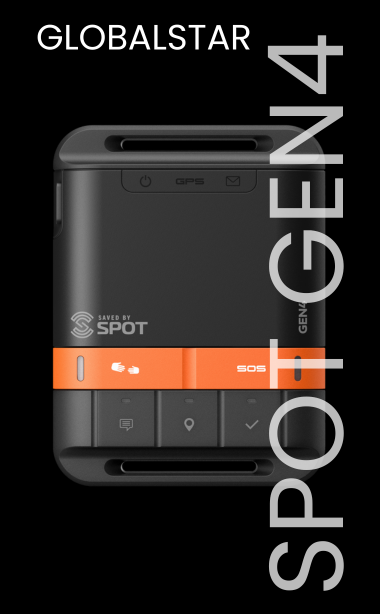
Satellite messengers and satellite communicators work differently. They use commercial satellite networks to provide features such as messaging, tracking intervals, location sharing, weather information, and sometimes two-way SOS communication. Those services consume commercial network capacity, which is why they generally require a service plan or prepaid credit.
A PLB does not place a voice call, send routine texts, or provide a map page your family can follow. It sends a distress alert through the dedicated international rescue system. For users who want a dependable last-resort emergency beacon with no ongoing airtime expense, that is exactly the point.
The question is not simply whether you want to avoid a subscription. It is whether a PLB gives you the communications capability your operation actually needs.
A PLB is often the better fit for someone who needs a highly focused emergency device. A wilderness hunter on a weeklong trip, a paddler crossing remote water, a pilot carrying backup survival gear, or a utility worker operating alone may value the straightforward SOS function, long shelf life, and absence of monthly charges. A PLB is also a strong backup layer when other communication equipment is unavailable, damaged, or out of power.
A satellite messenger is often the better choice when people need visibility before an emergency occurs. A family following an overland traveler’s route, a field manager monitoring lone workers, or a research team coordinating daily movements may need scheduled check-ins, tracking, and two-way messaging. Those features can reduce uncertainty and help teams handle delays, reroutes, and routine problems before they become emergencies.
For some deployments, carrying both is reasonable. A satellite communicator can support day-to-day coordination, while a PLB provides an independent emergency alert path. This approach is especially relevant for remote crews, offshore users, expedition teams, and others whose safety plan cannot depend on a single device or battery system.
A PLB should never be treated as a substitute for trip planning, protective equipment, navigation, or communication procedures. Activating one can initiate a significant search-and-rescue response. Use it only for a serious emergency where immediate assistance is needed and other practical options are not adequate.
There are also limits to what rescuers know after activation. A standard PLB alert tells authorities that you need help and, when location data is acquired, where you are. It does not let you explain the nature of an injury, describe changing conditions, confirm that help is no longer needed, or receive instructions. Two-way satellite communicators can offer those capabilities, subject to network conditions and an active plan.
Physical placement matters, too. Carry the beacon on your body or personal flotation device, not buried in a pack, mounted in a vehicle you may become separated from, or stored below deck where it may be inaccessible. In an emergency, the best device is the one you can reach and operate.
PLBs are designed for global distress alerting, including remote areas where cellular networks do not exist. However, satellite visibility, terrain, canyon walls, heavy forest canopy, antenna orientation, and whether the beacon has a clear view of the sky can affect how quickly an alert and location are received.
Before international travel, confirm that carrying and using a PLB is permitted at your destination. Some countries regulate satellite and radio equipment differently. Also review your emergency plan for the region, including local rescue capabilities, weather exposure, border crossings, maritime jurisdiction, and evacuation options.
For maritime and aviation users, make sure the beacon type matches the application. An aviation emergency locator transmitter, an emergency position-indicating radio beacon for vessels, and a personal locator beacon are related safety devices, but they are not interchangeable in every operational or regulatory setting.
The absence of a subscription makes PLB ownership predictable, but it is not entirely cost-free after purchase. Plan for periodic battery replacement, potential professional servicing, and replacement after a real activation if the manufacturer requires it. A quality protective pouch, lanyard, or mounting solution may also be worthwhile depending on how and where the beacon will be carried.
The larger investment is preparation. Register the beacon before departure, test it only as directed, train each person who may need to use it, and make sure your emergency contacts understand your itinerary. For organizations, document who has custody of each beacon, when batteries are due, and how personnel report an activation or near-miss event.
A PLB is not a monthly communication service. It is a dedicated rescue tool that stays ready without recurring airtime fees. If your requirement is emergency SOS only, that makes it one of the most practical off-grid safety devices available. If you also need tracking, messaging, and operational visibility, pair it with the right satellite communicator and plan. When the route leaves dependable coverage behind, choose equipment based on the help you may need before, during, and after an emergency.