English

0 item(s)
View cart
You have no items in your shopping cart.
A remote crew loses cellular service on a utility right-of-way. A hunting party separates across a ridge. A vessel moves beyond shore coverage. In each case, the satellite phone versus radio decision changes who can be reached, how quickly help can be called, and what happens when the local team is no longer within range.
The right answer is rarely one device for every job. Two-way radios are fast, practical tools for nearby coordination. Satellite phones extend communication far beyond the local area, connecting users with dispatch, family, emergency services, or outside experts when no terrestrial network is available. The strongest field communication plans often use both.
A two-way radio communicates directly with other compatible radios, or through a local repeater system. Its useful range depends on terrain, antenna height, power level, radio type, obstructions, and whether repeaters are available. A handheld radio may work exceptionally well around a job site, on a boat, or across an open valley. It may perform poorly when mountains, heavy timber, buildings, or distance block the signal.
A satellite phone connects to a satellite network rather than a nearby radio user. That gives it a fundamentally different role: reaching people outside the immediate operating area. With an appropriate network and a clear view of the sky, a user in a remote canyon, offshore work area, disaster zone, or backcountry camp can place a call or send a message to someone thousands of miles away.
That does not mean a satellite phone replaces every radio. A satellite call is usually one-to-one communication, may require a few moments to acquire the satellite, and depends on a service plan or prepaid airtime. Radios let an entire nearby team hear a call at once, often with the push of one button. For close-range coordination, that speed matters.
Choose radios when your people need to coordinate within a defined area and need immediate group communication. Construction teams, event staff, search teams, hunting partners, ski groups, marine crews, and utility personnel commonly benefit from radios because they keep operational traffic short and direct.
A radio is especially effective when users remain within known coverage of one another or a repeater system. On a large property, for example, well-positioned base stations and repeaters can turn radios into a dependable daily communications system. In a warehouse, campus, mine, marina, or incident command area, radios also avoid the delay and per-minute costs associated with telephone calls.
Radio systems come with planning requirements. License rules may apply depending on the service and frequency band. Teams need compatible equipment, programmed channels, charged batteries, call procedures, and an understanding of the terrain. A radio with an advertised long range should not be treated as a guarantee across mountains or through dense forest. Real-world range is often determined by line of sight.
For many recreational users, compact handheld radios are a sensible companion device. They allow a group to stay in touch while hiking different routes, spotting game, setting camp, or managing a vehicle convoy. But when everyone is outside radio range, the radio has no path to home or emergency coordination unless a repeater, base station, or other infrastructure is in place.
A satellite phone is designed for the moment local communications stop being local. It is the better choice when a person or team must reach a phone number, operations center, emergency contact, medical advisor, or logistics provider from outside cellular coverage.
Field researchers traveling between remote sites, offshore crews, expedition travelers, lone workers, and emergency-response personnel often need this capability. A satellite phone provides voice communication that can convey detail quickly: location, injury status, weather conditions, equipment failure, changing plans, or evacuation needs. That is a major advantage over a radio call that only reaches others within the local network.
Satellite coverage and device behavior vary by network. Some systems offer near-global coverage, while others focus on specific regions. Satellite visibility can also be affected by steep canyon walls, heavy tree cover, buildings, vehicle interiors, and obstructed horizons. Users should step into an open area or use an external antenna, docking station, or vehicle solution when the deployment calls for it.
For a worker traveling alone, a satellite phone can be a critical escalation tool. The person may use a radio to talk with nearby coworkers and the satellite phone to contact a supervisor or emergency coordinator if the team separates. For a boat operating well offshore, it can provide a direct path to shore-based support when VHF communications are no longer sufficient for the situation.
Neither category should be judged by a simple "works anywhere" claim. Radios rely on local propagation and system design. Satellite phones rely on the satellite network, subscription status, battery power, and a usable view of the sky. Both are reliable when chosen for the conditions they will actually face.
A satellite phone is not always the fastest device for a brief team instruction. If a crew is spread across a work zone, radio traffic remains more efficient. Likewise, a handheld radio is not an effective substitute for a satellite phone when a lone operator needs to call headquarters from 60 miles beyond the nearest road.
Weather alone is not usually the deciding factor, but environment can be. Thick canopy, narrow canyons, urban obstructions, and a device stored inside a vehicle can reduce satellite access. For radios, ridgelines and elevation changes may abruptly divide a group. Before a deployment, test communications where people will work, not just in the parking lot.
Battery discipline is equally important. Carry spare or extended batteries, use vehicle power where appropriate, protect devices from water and impact, and set check-in expectations. A communication device is only useful if the person holding it knows when to use it and has kept it ready.
The cost comparison goes beyond the purchase price. Radios may have low ongoing costs, particularly for a small team operating on approved channels. Larger professional systems can require licensing, programming, repeater equipment, installation, maintenance, and fleet management.
Satellite phones require an active SIM and airtime plan, whether prepaid or monthly. Voice minutes, message use, network coverage, and expected deployment length should shape the plan. A seasonal hunter or short expedition may be better served by a rental and a short-term airtime option. A utility contractor or field program with year-round travel may need owned equipment, recurring service, vehicle docks, and established call procedures.
For teams with recurring remote work, do not treat communications as a last-minute gear purchase. Identify where people operate, where cellular service fails, who must be contacted during an incident, and whether the team needs voice, group coordination, location visibility, SOS capability, or all of the above. Outfitter Satellite can help match the network, equipment, activation, and accessories to that deployment rather than forcing every user into the same device.
A backcountry pair may carry radios for trail and camp coordination, plus one satellite phone for contact beyond the group. A field crew may issue radios to every worker, assign a satellite phone to each vehicle or supervisor, and establish a scheduled check-in process. A vessel may use marine radio equipment for nearby traffic and safety calls while keeping satellite voice available for shore communication beyond normal coastal coverage.
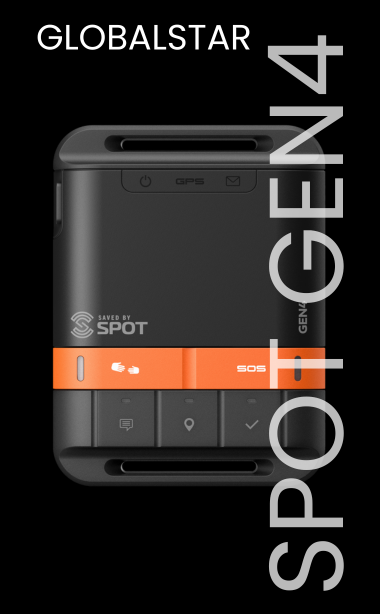
For high-consequence work, add location and emergency layers where appropriate. A personal tracker or satellite messenger can provide routine position updates and SOS access without requiring a voice call. A personal locator beacon may be the right emergency-only layer for some users. These tools do not eliminate the need for a plan, but they can reduce uncertainty when a person misses a check-in or cannot describe a location clearly.
Start with the communication distance. If every person stays within a few miles and needs constant group coordination, prioritize radios. If users must call outside the operating area, prioritize satellite voice. If both conditions apply, carrying both is not duplication - it is a layered communication plan.
Then consider the operating environment, number of users, call frequency, budget, trip length, training needs, and whether a missed check-in has operational or safety consequences. Also confirm coverage for every location on the itinerary, including alternate routes and evacuation paths.
The device on hand should match the next realistic problem, not the ideal forecast. Give nearby teams the radios that keep work moving, and give remote operators a satellite phone when they need a dependable path back to the people who can help.