English

0 item(s)
View cart
You have no items in your shopping cart.

A satellite phone only helps if it can register on the network where your team is standing, boating, flying, or responding. That is the real decision behind Iridium versus Globalstar voice. Both services can provide voice calling beyond cell coverage, but they are built for different coverage expectations, operating regions, devices, and budgets.
For a hunter headed into Alaska, a vessel working offshore, or a field manager responsible for people spread across multiple countries, network choice should come before handset price. A less expensive phone is not a bargain if it cannot deliver a call from the location that matters.
Iridium is generally the choice when the mission requires truly global reach. Its low-Earth-orbit satellite network is designed to provide voice coverage across the planet, including polar regions and broad ocean areas. For operations that move between countries, travel to high latitudes, work offshore, or need one communications standard for widely distributed personnel, that coverage profile is the main advantage.
Globalstar voice service is a strong option in supported regions, particularly much of North America and other designated coverage areas. It can be a practical fit for users whose travel stays within its service footprint and who want a straightforward satellite phone for calls from rural work sites, backcountry areas, or disaster-affected locations. However, its availability is not global. Coverage can be limited in remote oceans, at extreme latitudes, and in parts of the world outside its supported service areas.
That distinction changes the question from “Which phone is better?” to “Where must the phone work?” If the answer is the lower 48, southern Canada, a defined hunting area, or an established field route within Globalstar coverage, Globalstar may be a sensible value. If the answer includes international travel, Arctic operations, blue-water routes, or unpredictable deployment locations, Iridium is usually the safer planning choice.
Satellite voice plans are often compared by monthly fee and included minutes. Those costs matter, especially for a seasonal user or a large fleet of handsets. But coverage certainty has more operational value than a lower per-minute rate when a missed call could delay a medical evacuation, a weather decision, a crew check-in, or a logistics change.
Iridium's global network also supports continuity for organizations that cannot predict where work will take place next quarter. Utilities supporting storm restoration, researchers changing expedition routes, humanitarian teams crossing borders, and maritime operators moving between ports may prefer the simplicity of one network with near-worldwide reach.
Globalstar can make more financial sense for a stable, regional operating area. A ranch, wilderness lodge, construction project, or outdoor recreation user who remains within known coverage may not need to pay for global capability. The key is to validate the actual use area rather than relying on a broad map view. Mountain terrain, dense forest, canyon walls, vessel cabins, and nearby obstructions can affect access to any satellite system.
For either network, plan selection should reflect calling behavior. An emergency-only phone needs a different airtime approach than a field phone used for daily dispatch. Prepaid service can work well for intermittent or seasonal use, while recurring plans are often more predictable for teams that need active numbers and regular calling capacity. Confirm activation timing, plan expiration rules, incoming-call options, and any roaming or regional restrictions before deployment.
Neither service should be treated like a cellular phone inside a building or at the bottom of a narrow canyon. Both Iridium and Globalstar use low-Earth-orbit satellites, which can offer more natural voice timing than traditional geostationary satellite services. Still, a successful call depends on a clear enough view of the sky and correct handset positioning.
With an Iridium handheld phone, the antenna typically needs to be extended and oriented upright with a clear view overhead. The network's moving satellites and global architecture make it well suited to broad-area use, but users should remain still while connecting and avoid blocking the antenna with their body, vehicle roof, or pack.
Globalstar users also need open sky, and call performance can vary based on satellite visibility and the local service area. In open terrain within supported coverage, it can provide dependable voice service. In heavily obstructed terrain, users may need to move a short distance, wait for a better satellite pass, or use an external antenna solution.
Training is a practical advantage that is often overlooked. A team that has made a test call, saved key numbers with country codes, learned to read signal indicators, and knows when to step outside will use a satellite phone more effectively under pressure. Before any trip or assignment, place a test call from an open location and confirm that every user understands the calling procedure.
Iridium handheld phones are commonly selected for remote work and expedition travel because the network supports global voice communications and a broad ecosystem of accessories. Depending on the device, those accessories can include vehicle docks, fixed or mobile antennas, battery options, charging kits, hands-free cradles, and data-capable equipment. Some Iridium models also offer an integrated SOS function, but an SOS button is only useful when the associated emergency service is activated and users understand the response process.
Globalstar satellite phones are often attractive for users who primarily need clear, direct voice calling in supported areas. They can be a good choice for a remote cabin, regional guide service, outdoor work crew, or family safety plan where the coverage footprint has been checked in advance. As with Iridium, available accessories and service features vary by handset and plan.
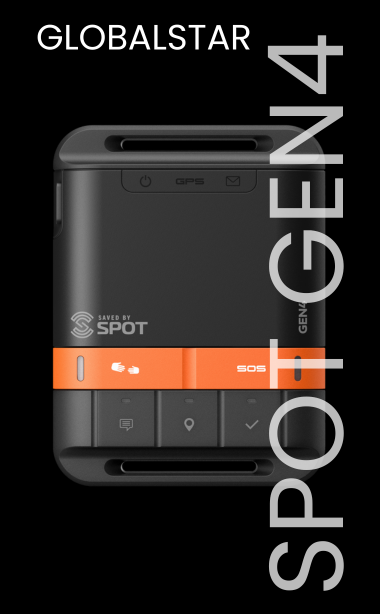
A satellite phone should not automatically replace every other safety device. For many teams, the strongest setup combines voice communications with a dedicated personal locator beacon, satellite tracker, or two-way messenger. Voice provides flexibility for explaining a changing situation. Tracking improves visibility for managers and family members. A PLB provides a purpose-built distress option without relying on a service subscription. The right mix depends on your emergency procedures, location, and level of self-sufficiency.
Choose Iridium when global coverage is a requirement rather than a preference. That includes polar travel, offshore and blue-water boating, international expeditions, aviation routes outside regional coverage, and enterprise programs with personnel in multiple countries. It is also the more conservative choice for users who may be rerouted or deployed with little notice.
Iridium is often worth the additional investment when communications are part of a formal safety plan. If a lone worker must check in from remote sites, or a response team needs dependable contact during an infrastructure outage, the ability to operate across a much larger geographic footprint reduces one major source of uncertainty.
Choose Globalstar when your calling locations are well established and fall squarely inside current supported coverage. It can be an efficient solution for domestic backcountry recreation, regional field operations, remote properties, and other North American applications where global access is unnecessary.
This choice works best when it is made deliberately. Review anticipated travel corridors, not just the final destination. Consider alternate routes, weather diversions, offshore distances, and the possibility that an emergency could require movement beyond the planned area. If those scenarios extend outside Globalstar coverage, the lower-cost option may introduce an unacceptable gap.
The right network is only the first step. Select a handset and plan based on the environment, expected call volume, power access, and how the phone will be carried. A backpacker may prioritize battery life and simple operation. A vehicle crew may benefit from a dock and external antenna. A vessel may need a fixed installation that keeps the phone accessible below deck.
Renting can be a smart way to cover a one-time expedition, seasonal project, or short disaster-response assignment without purchasing equipment that will sit unused. For long-term field programs, ownership and a recurring airtime plan may provide better control over device readiness. In either case, activate early, test before departure, and carry backup power.
Outfitter Satellite can help match the network, device, airtime plan, and accessories to the places your people actually operate. The best satellite voice solution is the one your team can reach for confidently, use correctly, and rely on when the cellular bars disappear.