English

0 item(s)
View cart
You have no items in your shopping cart.
A dead phone battery, a washed-out access road, a fall on a remote trail, or a vessel taking on water can turn a routine outing into a rescue situation quickly. Emergency beacons are built for the moment when cellular service, local infrastructure, and ordinary communication plans are no longer enough. The right device does more than send an alert. It gives responders credible location information and gives your team a defined way to act.
For a solo hunter in the backcountry, that may mean a compact personal locator beacon in a pack. For a utility crew working across remote service territory, it may mean two-way satellite messaging with scheduled check-ins and an escalation procedure. For offshore crews and aircraft operators, regulated maritime and aviation beacon equipment may be part of the required safety setup.
The term emergency beacon covers several device categories, and the distinction matters. Some products send a dedicated distress signal through the international Cospas-Sarsat satellite system. Others use commercial satellite networks to send an SOS to a monitoring center and, depending on the device, support location sharing and two-way messages.
A personal locator beacon, or PLB, is a purpose-built emergency device. When activated, it transmits a 406 MHz distress signal that can be detected by search-and-rescue satellite systems. Most modern PLBs also include GPS or GNSS positioning, which helps provide rescuers with a much more precise initial location. Many include a 121.5 MHz homing signal to help rescue personnel locate you during the final stage of a search.
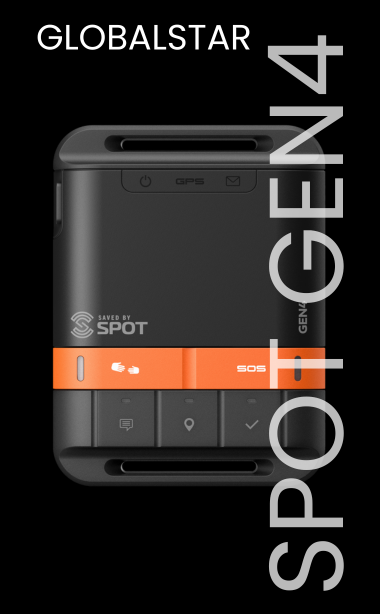
Satellite communicators and satellite messengers also offer SOS functionality, but they are designed for broader communication. They can commonly send preset check-ins, track a route, share location points, and exchange messages with your contacts or an emergency coordination center. They are often the better fit when people need regular visibility into a trip or remote work assignment, not only a last-resort distress button.
Maritime emergency position-indicating radio beacons, known as EPIRBs, and emergency locator transmitters, or ELTs, serve marine and aviation uses. These are not interchangeable with a hiking PLB. They are designed around specific environments, mounting requirements, regulations, and operational procedures.
The best emergency beacon is not simply the smallest model or the one with the longest feature list. Start with the rescue and communication outcome you need.
If your priority is a dedicated, subscription-free distress signal for individual backcountry travel, a PLB is often the cleanest choice. It has one job: summon help when there is a grave and imminent emergency. A PLB does not replace routine communications, family check-ins, weather updates, or team coordination.
If you need to tell a dispatcher that a crew has reached a job site, report a changing weather condition, or coordinate a non-life-threatening evacuation, a two-way satellite messenger is usually more practical. Its SOS function remains valuable, but its day-to-day messaging capabilities make it easier to manage developing situations before they become full emergencies. That convenience generally comes with a service plan or usage cost.
For a boat, aircraft, or operational fleet, selection should begin with the applicable safety standards and your established emergency plan. Battery capacity, water resistance, mounting location, automatic activation options, and integration with onboard communications can all be more important than consumer-style features.
Satellite coverage maps are useful, but they do not guarantee that every alert will perform equally in every setting. A beacon or messenger needs a workable view of the sky. Dense timber, steep canyon walls, metal structures, deep ravines, and placement inside a vehicle can delay a location update or message transmission.
This is why deployment habits matter. Carry a device where you can reach it after a fall or capsize, not buried at the bottom of a pack. When sending a non-emergency message or tracking point, move into the clearest available opening and keep the antenna oriented as instructed by the manufacturer. For vehicle teams, consider an external antenna or a fixed communication solution when the device will be used from inside a cab or enclosed equipment.
Rescue also depends on the information around the alert. A precise coordinate is powerful, but responders may still need to know your itinerary, vehicle description, group size, medical concerns, travel direction, and planned return time. The people at home or at your operations center should know what device you carry and what an SOS alert means in your plan.
A 406 MHz PLB, EPIRB, or ELT must be registered with the appropriate national authority. Registration connects the beacon identification number to information that can help responders validate an alert and plan a response. Keep the record current when your phone number, emergency contacts, vessel information, aircraft details, or typical operating area changes.
Satellite messengers require a different kind of preparation. Activate the device and service plan before departure, then confirm that your emergency contacts and message recipients are correct. Create clear preset messages that answer common questions, such as "On schedule," "Delayed but okay," or "Need non-emergency assistance." These messages reduce uncertainty without tying up a satellite connection for unnecessary back-and-forth.
For organizations, avoid assigning a device to a generic kit with no named owner or documented check-out process. The operations manager should know who has the device, which plan is active, when the battery was last checked, and who will receive tracking or SOS notifications. Accountability is what turns a device purchase into a workable safety program.
Do not wait until a remote trip to learn button sequences, charging requirements, antenna placement, or message timing. Review the manual, complete all available manufacturer-approved self-tests, and send a routine test message where permitted. Never activate an SOS or distress function as a casual test.
Battery rules vary by device. PLBs generally use a long-life sealed battery intended for emergency activation, with replacement required on the manufacturer schedule or after use. Satellite communicators typically use rechargeable batteries and need a charging plan for multi-day trips. Cold weather, continuous tracking intervals, and frequent messaging can reduce available battery life substantially.
Before each deployment, inspect the housing, antenna, seals, and mounting hardware. Confirm that the unit has not passed its battery replacement date and that the SOS cover or activation mechanism is protected from accidental use. For rental equipment, perform this same familiarization step as soon as the equipment arrives, rather than at the trailhead or dock.
A beacon is a final layer of protection, not permission to take avoidable risks. Set check-in times, share your route, establish turn-around criteria, and define what your contacts should do if you miss a scheduled message. A field team should know when to use routine messaging, when to call for operational support, and when an SOS is justified.
Use the emergency function for a serious threat to life, limb, vessel, or aircraft, or when immediate rescue is required. A broken vehicle in a remote area may call for an SOS if weather, injury, exposure, or lack of safe options creates an urgent danger. If everyone is safe and you only need a tow or a schedule update, a two-way satellite messenger or satellite phone may give you a more appropriate way to explain the situation.
That distinction matters to responders and to the people waiting for you. Clear communication can prevent a manageable delay from becoming a costly, confused search effort.
Ownership makes sense for frequent users who want their device ready for every hunting season, road trip, offshore run, or field assignment. It also gives teams time to standardize training, accessories, service plans, and operating procedures.
Rental can be the practical choice for a one-time expedition, a temporary construction project, disaster deployment, or a short offshore assignment. The trade-off is that the device must be reserved, activated, and tested early enough to avoid last-minute surprises. For teams deploying multiple people, it can be more efficient to pair individual emergency devices with shared satellite phones, vehicle docks, or fixed tracking equipment.
Outfitter Satellite can help match the device, network, and service approach to the way your people actually travel and work. The right recommendation starts with your location, duration, terrain, communication needs, and who is responsible for responding when a signal comes through.
The device you carry should be easy to reach, ready to activate, and supported by people who know your plan. That preparation is what gives an emergency beacon its real value when the route changes and help is far away.