English

0 item(s)
View cart
You have no items in your shopping cart.
A satellite phone can be your only link to a team, family member, dispatcher, or emergency response resource when cellular service ends. But satellite phone range is not measured the way radio range is. There is no simple mile figure that tells you whether a call will work. The real question is whether your device can see the satellite network clearly enough to register and maintain a connection.
For a hunter in a canyon, a vessel crew under a covered deck, or a utility worker beneath dense tree cover, that difference matters. A satellite phone may have service available across an entire region or around the globe, yet a nearby ridge, building, cabin roof, or vehicle can still prevent a call from connecting.
With a VHF, UHF, or two-way radio, range commonly refers to the distance between two radios. Satellite phones work differently. Your handset communicates upward to a satellite, which relays the signal through the network to a ground station and then to the person or number you are calling.
That means a satellite phone's practical range is determined by network coverage and line of sight, not the distance from the person you need to reach. If your network covers your location and the antenna has a clear enough view of the sky, you can call a person nearby, across the country, or on another continent.
The distinction between coverage and connection conditions is the key to making a sound equipment decision. Coverage tells you where the network is designed to operate. Connection conditions tell you whether you can use it at your exact location at that exact moment.
Satellite phone signals are relatively low-power signals traveling a long way between the handset and the satellite. A partial obstruction can be enough to delay registration, drop a call, reduce call quality, or stop a connection entirely.
The most reliable place to use a handheld satellite phone is outdoors with an open view of the sky. Stand clear of cliffs, tall buildings, heavy canopy, metal roofs, and overhangs. Extend the antenna fully, hold the phone upright as directed by the manufacturer, and allow time for it to acquire the network before placing an important call.
This does not mean a phone is unusable anywhere other than an open field. It means expectations need to match the setting. Light tree cover may allow a connection, especially if the handset can see a gap in the canopy. A narrow canyon, dense forest, or urban street bordered by tall structures may require moving a short distance to find a better sky view.
For fixed sites, vehicles, vessels, and indoor operations, an external antenna can change the result significantly. A properly selected and installed antenna moves the radio signal to a location with a better view of the sky while allowing the phone or docking station to remain protected and accessible inside.
Not all satellite networks place satellites in the same type of orbit. That affects how you use the handset and what kind of sky view you need.
Low Earth orbit networks use satellites that move across the sky. Their coverage can be global, including polar areas, but the satellite available to your phone changes as the constellation moves. The phone and network manage these transitions, yet terrain and obstructions can still interfere with access to the satellite currently in view.
Geostationary networks use satellites positioned high above the equator. From the ground, the satellite appears to remain in roughly the same part of the sky. This can be useful for a fixed installation with a properly aimed antenna, but users at higher northern or southern latitudes may need a clearer view toward the equator. Mountains, trees, or buildings in that direction can have an outsized effect.
Neither approach is automatically better for every deployment. The right network depends on where you operate, whether you travel internationally, the latitude of your work area, your expected terrain, and whether communications are handheld, vehicle-mounted, maritime, or fixed-site.
Many buyers hear that satellite phones work "anywhere" and assume every model works at every coordinate. That is not accurate. Some networks provide near-global coverage, while others focus on specific regions. Even a network with broad global reach can have exceptions based on geography, government restrictions, local licensing rules, or service availability.
Before deploying internationally, confirm that your chosen network supports every country and operating area on the itinerary. Also check whether satellite equipment is permitted for import, possession, or use. Rules can vary by country and can change without much notice. A device that works well for domestic field operations may not be the correct option for overseas travel.
Maritime and aviation users should apply the same discipline. Offshore coverage may be excellent, but antenna placement, vessel structure, flight procedures, and the need for hands-free operation should be evaluated before departure. The best time to resolve a coverage or installation issue is at the dock, hangar, shop, or staging area, not after the cellular signal disappears.
A clear sky view is the main requirement, but several other factors affect real-world performance:
Good field habits make satellite communications more dependable. First, power on the phone before it becomes urgent. Let it register on the network while you still have time to reposition if needed. If you are leading a group or managing a remote crew, establish a check-in point with known open sky rather than waiting until someone is behind a ridge or inside a vehicle.
Second, test both the device and the service plan before every trip, project, or deployment. Make a short call, verify the assigned number, confirm available airtime, and check battery condition. If the phone is part of an emergency plan, make sure the people who may use it know how to extend the antenna, read signal indicators, place a call, and provide their location.
Third, plan for the environment. A backpacker may only need to walk to an opening for a scheduled check-in. A field team working from trucks may need docking stations and roof-mounted antennas. A remote operations site may need a permanently installed external antenna and backup power. Matching the setup to the mission is more effective than expecting one handheld device to solve every communications challenge.
A voice-capable satellite phone is valuable when people need to explain an evolving situation, coordinate logistics, or speak directly with emergency support. It is not always the only device worth carrying.
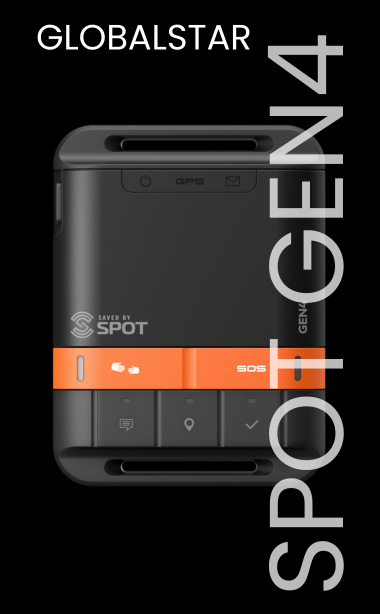
For routine check-ins, location visibility, and SOS functions, a satellite messenger or personal locator beacon may be lighter and simpler. For teams transmitting maps, reports, video, or operational data, satellite internet may be the better fit. In many professional deployments, the strongest plan combines tools: a tracker for routine visibility, a satellite phone for voice escalation, and an external antenna or dock for the primary vehicle or base location.
This layered approach also reduces the pressure on one device. If a handset has trouble acquiring a signal from a particular location, a team may still have a tracker position report, prearranged check-in procedure, or vehicle-mounted communications option available.
Start with where you will actually use the equipment, not where you hope it will work. List the states, countries, waterways, flight routes, or work zones involved. Then consider terrain, expected sky visibility, trip duration, number of users, voice versus data needs, and whether the device must work from inside a vehicle, building, or vessel.
For occasional travel, renting a satellite phone can be a practical way to confirm that a network and handset fit the mission without committing to ownership. For repeated field operations, purchasing equipment with the right airtime plan, accessories, and external antenna support often provides better long-term readiness. Outfitter Satellite can help match network coverage, hardware, activation, and installation needs to the conditions your team will face.
The dependable answer to satellite phone range is not a number of miles. It is a prepared user, an active device, the right network, and a clear path to the sky when communications matter most.