English

0 item(s)
View cart
You have no items in your shopping cart.

Buying a satellite phone is not just about choosing the handset, because behind every satellite phone is a satellite network, and the network you choose has a huge impact on where your phone works, how reliable it is, and what you'll pay for airtime.
Some networks provide truly global coverage. Others focus on specific regions. Some are ideal for polar expeditions, while others are better suited to overlanding, offshore travel, emergency preparedness or remote business operations.
So which satellite network is right for you? Let's take a closer look at the world's leading satellite communications providers.
Unlike a cell phone, which connects to nearby towers, a satellite phone communicates directly with satellites orbiting the Earth.
That means your coverage depends entirely on the satellite network your handset is designed to use. Choosing the wrong network could mean paying for worldwide coverage you don't need, or worse, discovering your phone won't work where you're traveling.
That's why it's always worth choosing the network first, then the handset.
| Network | Coverage | Best For | Popular Handsets |
|---|---|---|---|
| Iridium | Truly global, including the poles | Expeditions, maritime, aviation, government | Iridium Extreme 9575, Iridium 9555 |
| Inmarsat | Near-global, excluding extreme polar regions | Travel, business, offshore, NGOs | IsatPhone 2 |
| Thuraya | Europe, Africa, Middle East, Asia & Australia | Regional travel, overlanding, cost-conscious users | Thuraya XT-LITE, Thuraya XT-PRO |
| Globalstar | Regional coverage | Outdoor recreation in supported regions | SPOT devices |
When people think of satellite communications, Iridium is often the first name that comes to mind.
Iridium operates a constellation of low Earth orbit satellites that provide truly global coverage, including the poles. That makes it one of the most capable satellite networks in the world and a leading choice for users who need dependable communications in extreme or unpredictable locations.
That makes it the preferred network for:
Whether you're crossing Antarctica, sailing across the Pacific, supporting field teams or preparing for emergency communications, Iridium is designed to keep you connected where other networks may not reach.
✔ Truly global coverage
✔ Excellent reliability
✔ Works in polar regions
✔ Large ecosystem of satellite phones, hotspots and terminals
Iridium generally has higher handset and airtime costs than regional networks, but those costs reflect the level of coverage it provides. If your destination is remote, unpredictable or global, Iridium is often worth the investment.
If your travels don't include the polar regions, Inmarsat is one of the best value satellite networks available.
For decades it has been trusted by commercial shipping, broadcasters, humanitarian organizations and businesses operating around the globe. Its geostationary satellites provide dependable coverage across most inhabited parts of the world, making it a strong choice for users who need reliable satellite communications without necessarily paying for polar coverage.
It's an excellent choice for:
For many users, the Inmarsat IsatPhone 2 offers a very practical balance of coverage, battery life, call quality and overall cost.
✔ Excellent voice quality
✔ Outstanding battery life on compatible phones
✔ Lower ongoing costs than some global alternatives
✔ Reliable coverage across most of the globe
Inmarsat coverage does not extend into the extreme polar regions, so it is not the right option for Arctic or Antarctic travel. For most users operating across North America, Europe, Africa, Asia, Australia and much of South America, however, it can be an excellent choice.
Thuraya takes a different approach.
Rather than covering the entire globe, it concentrates on Europe, Africa, the Middle East, much of Asia and Australia. For people operating within those regions, Thuraya can be an extremely cost-effective satellite communications solution.
Popular with:
If you're traveling through areas such as North Africa, the Middle East or Central Asia, Thuraya can deliver excellent value without forcing you into a global network you may not need.
✔ Lower handset costs
✔ Competitive airtime
✔ Great regional coverage
Thuraya is not suitable for North America, South America or the polar regions. Before choosing a Thuraya satellite phone, it is important to check that your destination falls within the network's coverage footprint.
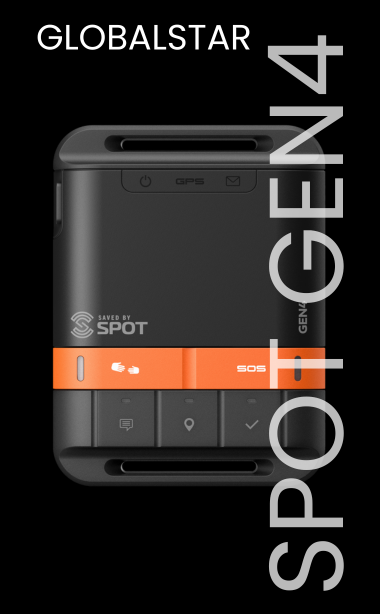
Globalstar is another satellite network, but it is usually discussed slightly differently because many users encounter it through SPOT tracking and messaging devices rather than traditional satellite phones.
Globalstar coverage is regional rather than truly global, but within supported areas it can be a strong option for outdoor recreation, location tracking and basic emergency messaging.
It is particularly well known among hikers, hunters, boaters and backcountry users who want a simple tracking or SOS device rather than a full satellite phone.
The answer depends entirely on where you're going.
If your work or adventures could take you literally anywhere on Earth, Iridium is the clear winner. Its global satellite network, including polar coverage, makes it the most complete option for users who cannot afford coverage gaps.
If you're traveling across Africa, Europe, Australia or much of Asia, Inmarsat or Thuraya may provide everything you need, often at a lower overall cost.
That's why asking "Which satellite network is best?" is not always the right question.
The better question is: which satellite network is best for where I am going?
It's easy to assume the most expensive option is always the best.
In reality, it is about matching the network to your needs.
If you're hiking across Patagonia, planning an Arctic expedition or sailing around the world, paying extra for Iridium's global coverage makes perfect sense.
If you're driving across Morocco, working throughout Europe and the Middle East or traveling within Thuraya's footprint, a regional Thuraya solution could save you money without sacrificing the coverage you actually need.
Likewise, many travelers find Inmarsat strikes the perfect balance between affordability and dependable near-global coverage.
One of the easiest ways to compare networks is by looking at the handsets available.
Each handset has been designed around its respective network, so choosing your preferred coverage area naturally narrows down your options.
Here's a simple rule of thumb.
Choose Iridium if you need communications anywhere on Earth, including the polar regions.
Choose Inmarsat if you want dependable near-global coverage and excellent value outside the extreme polar regions.
Choose Thuraya if you'll remain within its regional footprint and want one of the most affordable satellite communications solutions available.
Choose Globalstar if you are looking for tracking, SOS or messaging through supported SPOT devices within Globalstar coverage areas.
There isn't one universally best satellite network. There is only the network that best fits your destination, budget and communication needs.
Whether you're preparing for an expedition, working in remote locations, sailing offshore or building an emergency communications kit, choosing the right network is the first step.
Explore Outfitter Satellite's collections of Iridium, Inmarsat and Thuraya satellite phones to compare handsets, coverage and airtime options side by side.
Our team is always happy to help you choose the network that's right for your destination, not just the most expensive one.