English

0 item(s)
View cart
You have no items in your shopping cart.

Heading off-grid has never been more popular. From overlanding and backcountry hiking to offshore boating, hunting trips, remote travel, and off-grid camping, more people are pushing further beyond traditional cellular coverage than ever before. At the same time, satellite technology has become smaller, more affordable, and easier to use, opening the door to a much wider range of outdoor users.
But one question still comes up constantly: should you carry a satellite phone or a satellite messenger?
The answer depends entirely on how you travel, where you go, and how you expect to communicate when mobile coverage disappears. For some adventurers, a compact satellite messenger is the perfect lightweight safety tool. For others, the ability to make a full voice call from virtually anywhere in the world is absolutely essential.
Understanding the differences between the two can help you choose the right device for your adventures.

A satellite phone works much like a traditional mobile phone, except it connects directly to satellites rather than terrestrial cell towers.
This allows users to make voice calls and send messages from remote regions where standard cellular networks are unavailable. Satellite phones are widely used by expedition teams, offshore operators, emergency responders, remote workers, and travelers operating far beyond traditional infrastructure.
One of the biggest advantages of a satellite phone is immediacy. If something goes wrong, you can place a live voice call directly to emergency services, support teams, family members, or operational contacts. In many situations, hearing a real voice and communicating information in real time can be invaluable.
For remote travelers spending extended periods away from civilization, this level of communication can provide significant peace of mind.
Dedicated satellite phones are designed specifically for reliable communications in demanding environments.
Devices such as the Iridium 9555 remain popular because they offer dependable global voice and SMS communications in a straightforward, reliable format.
For users needing additional safety and tracking functionality, the Iridium Extreme® 9575 adds integrated GPS tracking, SOS functionality, and enhanced durability for more demanding environments.
Unlike some other communications systems, Iridium devices operate on a truly global satellite network, including polar regions and remote offshore environments. This makes them particularly attractive for expeditions, marine operations, overland travel, and international adventure use.
Satellite phones are often the preferred option for:

Satellite messengers take a slightly different approach. Rather than focusing primarily on voice calls, satellite messengers are designed around lightweight tracking, location sharing, SOS functionality, and two-way messaging. These devices have become extremely popular among hikers, backpackers, campers, hunters, paddlers, and adventure travelers who want a compact safety device without carrying a full satellite phone.
Modern satellite messengers allow users to:
The Garmin inReach series has become one of the most popular choices for outdoor satellite communication in recent years.
Devices such as the Garmin inReach Mini 2 offer two-way satellite messaging, SOS functionality, location sharing, and GPS navigation features in an extremely portable format.
For hikers, trail runners, backpackers, hunters, and lightweight adventurers, this combination of safety and portability is highly appealing. The newer Garmin inReach Mini 3 and Garmin inReach Mini 3 Plus continue building on this compact approach while adding newer features and improved functionality for outdoor users.
For many people, a satellite messenger strikes the ideal balance between emergency communications, navigation support, and portability. Outfitter Satellite also now offers inReach Mini 2 rentals, making it easier for travelers and occasional adventurers to access satellite messaging technology without purchasing a device outright.

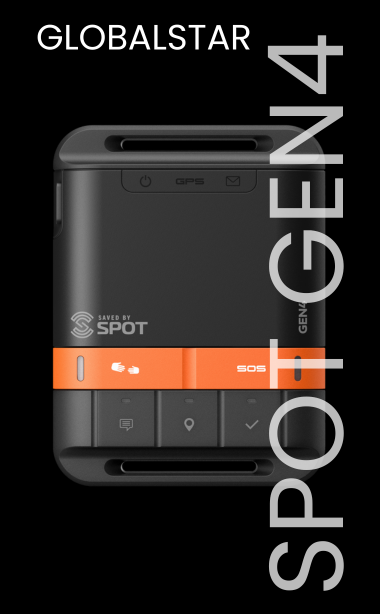
For users primarily focused on tracking and emergency SOS functionality, SPOT devices remain a popular option. The SPOT Gen4 is widely used for basic tracking, check-ins, and emergency signaling during outdoor activities and remote travel. Compared to some two-way messaging devices, SPOT trackers often appeal to users looking for a straightforward safety and location-sharing solution without additional communication complexity.
For solo travelers, outdoor workers, hunters, and recreational users, this can provide an additional layer of reassurance while operating outside cellular coverage.
The best device depends largely on how you travel and what level of communication you expect to need.
If your priority is live voice communication from virtually anywhere in the world, a satellite phone is usually the better choice. This is especially true for international travel, offshore operations, remote vehicle expeditions, and higher-risk environments where direct conversation may become important during an emergency.
If your priority is lightweight emergency communication, GPS tracking, navigation, and occasional messaging, a satellite messenger may make far more sense.
Many outdoor users increasingly choose satellite messengers because they are easier to carry daily and integrate naturally into hiking, camping, overlanding, and adventure travel setups.
For some expeditions and professional operations, carrying both can provide the best balance of communication capability and redundancy.
As more people explore remote environments, satellite communications are rapidly becoming part of standard outdoor safety planning. What was once considered specialist expedition equipment is now widely used by hikers, travelers, hunters, boaters, campers, overlanders, and outdoor professionals across the world.
Modern satellite devices are smaller, smarter, and more accessible than ever before, allowing adventurers to stay connected far beyond traditional network coverage.
Whether you need full voice communications through a satellite phone or lightweight SOS messaging through a satellite communicator, the right device can help improve safety, confidence, and operational flexibility during remote adventures.
At Outfitter Satellite, we supply a wide range of satellite phones, satellite messengers, GPS communicators, and off-grid communication solutions for outdoor adventures and remote operations worldwide.